
Why Pressure Washing Is Essential Before Any Painting Project
You scraped your siding with a fingernail and a fine gray powder came off on your hand. Or the last coat is flaking near the gutters, lifting in sheets that should still be tight. Maybe you rolled fresh paint onto the porch last month and watched it bubble. Every one of those moments points back to the same overlooked step, and it has nothing to do with the paint you chose.
Paint does not bond to dirt, salt, chalk, or mildew. It bonds to a clean, sound surface. Here on the coast, exterior walls collect a thin film of airborne grime, organic growth, and old oxidized coating that the eye barely registers. Lay new paint over that film and you are gluing your finish to a layer that will release the moment it gets wet or warm. Washing first is not about appearance. It removes the exact contaminants that cause early failure. After prepping hundreds of exteriors near the water, we can tell you that nearly every premature peel we are called back to inspect traces to a wall that went unwashed or got painted before it dried.
Start Here Before You Open A Single Can
If you are planning to repaint soon, work through these steps in order.
- Rub your palm across several sun facing walls. Chalky residue means oxidation that has to come off.
- Look for dark speckling in shaded spots and under eaves. That is mildew, not dirt, and rinsing will not kill it.
- Wash the entire surface, not just the dirty parts, then let it dry fully before any primer or paint.
- Inspect again once dry for loose, peeling, or alligatored coating that washing exposed.
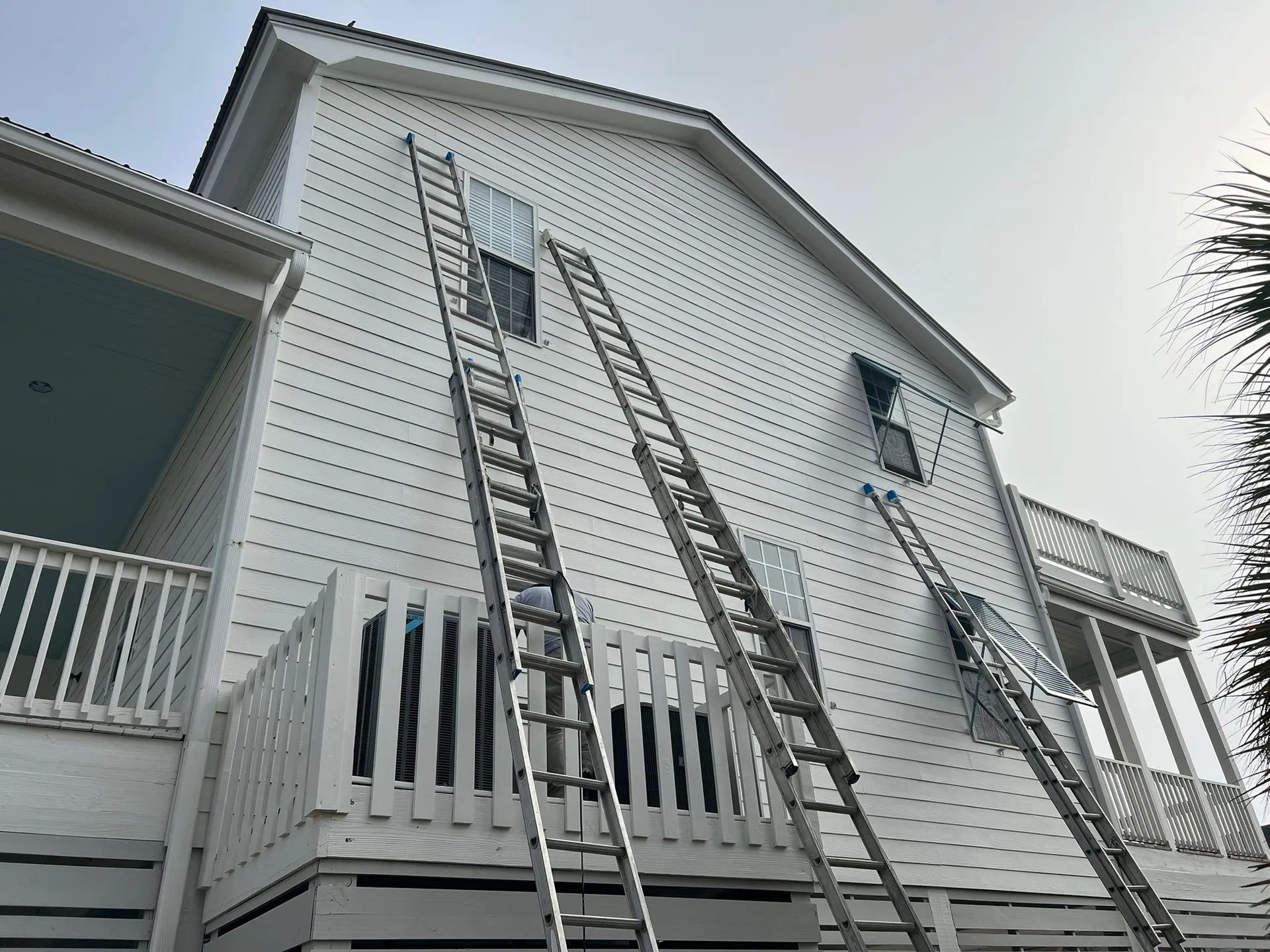
WARNING: A pressure washer can drive water up under siding, strip soft wood, and throw debris hard enough to injure you. Wands also kick back on ladders, and spray near outdoor outlets, meters, and fixtures carries a real shock risk. If your home has second story walls, aging wood, or wiring close to the surface, bring in someone who handles this weekly.
TIP: Press a strip of painters tape firmly onto a dry wall and peel it off. If it lifts paint flakes or comes away dusty, the surface needs washing plus spot scraping before you prime.
What Is Actually Sitting On The Wall
The film blocking your paint is rarely one thing. It is several layers built up over the seasons, and each fights adhesion in its own way.
The most common culprit is mildew and algae. Spores settle into the porous texture of paint and siding, feed on moisture and pollen, and spread as a dark or greenish haze. Paint over living growth and it keeps growing underneath, pushing the new film off the wall. The second layer is chalking, the powdery residue you feel when an older coat oxidizes under sun. That powder acts like a release agent, so anything applied on top slides off within a season or two. Add windblown salt, spring pollen, and sap from oaks and pines, and you have a surface that looks paintable but is hostile to a new coat.
Salt is the factor that sets coastal walls apart. Fine airborne salt settles on every surface within a few miles of the water and pulls moisture from the air, keeping walls damp far longer than inland homes deal with. That lingering dampness feeds mildew and weakens adhesion at once. It is the biggest reason a finish that would last eight to ten years inland can fail in three or four near the marsh when prep is rushed.
How We Read A Wall Before We Wash
Washing is a diagnostic step, not just a cleaning step. Before any water hits the wall, we walk the elevation and sort what we are seeing.
First we test for chalking by hand and note which exposures are worst, usually the south and west walls that take the hardest sun. Second we check shaded and north facing areas for mildew, since those hold moisture long after a rain. Third we probe trim, fascia, and the lower courses of siding for soft spots, since wood that stays damp behind a salt film often hides early rot no paint will cover. On service calls we frequently find that a wall looked fine from the driveway and revealed real trouble only once it was clean and dry.
We match the
washing method to what the surface can take. Older or brittle siding and aged wood get a gentler approach at lower pressure with a solution that kills mildew at the root rather than blasting it loose. Hard, sound masonry tolerates more force. The goal is the same: lift every contaminant without forcing water into seams or chewing up the substrate.
Why The Coast Changes The Timeline
Salt air, humidity, and long warm seasons mean our walls get dirtier faster and dry slower than the national average, so two details matter more here than almost anywhere.
Timing is the first. A wall can look dry within an hour yet still hold moisture in the wood and behind the siding for a day or longer when humidity stays high. Painting over that trapped moisture is a leading cause of blistering, so we plan around dry stretches and give surfaces real time to release moisture rather than rinse and roll the same afternoon. Pollen is the second. Heavy spring pollen settles onto fresh prep within hours, so washing and painting need to stay close together rather than washing one week and painting the next.
Keeping A Finish Clean Between Repaints
A light rinse two or three times a year clears salt and pollen before that film bonds and feeds mildew. Once a year, check shaded walls, the north side, and anything under tree cover for early speckling and treat it before it spreads. Keep shrubs and limbs trimmed back so air moves across the walls and dries them faster after rain and morning marsh fog. These small habits stretch the life of any coating and make the next repaint far easier.
Missteps We See Most Often
The most frequent one is rinsing instead of cleaning. A garden hose moves loose dust but leaves the salt film, chalk, and mildew roots in place, and that is the part that actually breaks adhesion. People do it because the wall looks clean afterward, and that false sense of done is the trap.
The second is painting too soon after washing. It feels efficient to wash in the morning and paint by afternoon, but coastal humidity keeps walls damp longer than the surface appears, and trapped moisture pushes the new coat off. The third is treating mildew like dirt. Scrubbing or blasting it spreads spores and leaves living growth behind, so it returns through the fresh paint. The fix in every case is the same: clean thoroughly with the right solution, then wait for a fully dry surface before priming.
Frequently Asked Questions
Do I really need to wash if my siding looks clean?
Yes. The films that wreck adhesion, salt, chalking, and early mildew, are mostly invisible from a few feet away. A wall can look clean and still hold a release layer that lifts fresh paint fast.
How long should I wait between washing and painting?
Give the surface a full day to dry in coastal humidity, sometimes longer after heavy washing or steady damp weather. Wood and siding hold moisture well past the point the surface feels dry, and painting early traps it underneath.
Will a garden hose work instead of pressure washing?
No. A hose rinses loose dust but leaves salt, chalk, and mildew roots bonded to the wall. Those are the contaminants that cause peeling, so a rinse gives a clean look without solving the real adhesion problem.
Can pressure washing damage my home?
It can. Too much force strips soft wood, drives water behind siding, and creates shock risk near outlets and fixtures. Matching pressure to the surface and softer methods on aging walls prevents the damage a high powered blast would cause.
How often should the exterior be washed if I am not repainting?
Rinse two or three times a year to clear salt and pollen, and check shaded walls yearly for mildew. Regular cleaning slows buildup, protects the current finish, and makes the next repaint go faster.
Proven Prep Work From Painters You Can Trust
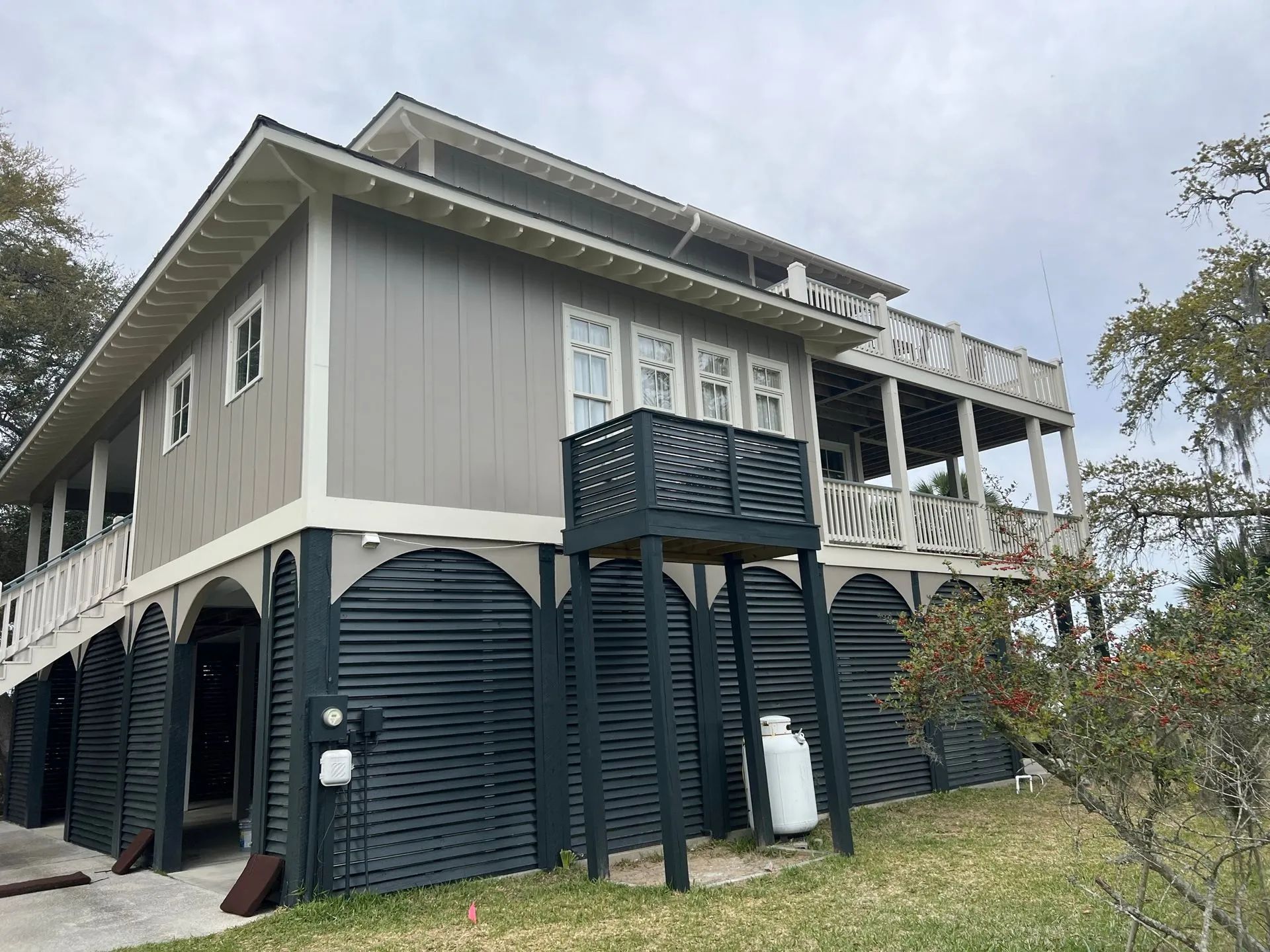
A finish lasts only as long as the surface under it is truly clean and dry, and that margin is thinner here than almost anywhere, because coastal walls collect salt and grow mildew faster than inland homes ever will. For 40years, Preferred Quality Painting, LLC
has prepped and painted exteriors built to stand up to salt air and marsh humidity. If you are planning to repaint across Edisto Island, South Carolina, reach out to us before you open a can and let us make sure the wall under your new paint is ready to hold it.