
Chalky Residue on Your Hands From the Siding? What Oxidized Paint Means
Quick Answer: That fine white powder coating your hand after you brush against the siding is chalking, the visible sign that UV light, oxygen, and moisture have broken down the resin binder holding your paint's pigment together. Once the binder degrades, the pigment particles it used to hold in place are left loose on the surface, and they rub off on anything that touches them. A light dusting that wipes away easily usually just needs a wash before the next coat. A heavy chalk layer that keeps coming back after cleaning, or that leaves a visible residue on your palm after one light touch, means the paint film has used up most of its protective life and the surface needs to be properly cleaned and primed before it's repainted.
What Causes Chalky Residue on Exterior Siding?
You lean against the porch rail to pull off your shoes, or your shoulder brushes the siding on the way to the side yard, and there it is: a chalky, whitish film on your hand or a smudge across your shirt that wasn't there before. It rinses off easily enough, but it comes back the next time you touch the same wall. Homeowners on Edisto Island and around the Lowcountry usually notice it first on dark clothing, since the powder shows up clearly against navy or black, or on car paint parked close to the house.
That residue has a name, and it's telling you something specific about the condition of your paint. It isn't dirt, and it isn't mildew, even though the two get confused often enough. It's the paint itself, breaking down and shedding its pigment onto anything that comes into contact with it.
What's Actually Happening to the Paint
The Binder Is Breaking Down, Not the Pigment
Paint is built from pigment particles suspended in a resin binder, and the binder is the part doing the real work of holding everything together and adhering to the wall. Sunlight, oxygen, and moisture combine to break down that resin over time in a process called photodegradation. As the binder degrades, it stops holding the pigment particles in place, and those particles end up loose at the surface instead of locked into the film.
Why the Residue Is White, Even on a Colored House
A large share of exterior paints use titanium dioxide as the primary white pigment, valued for how well it scatters light and covers a surface. Titanium dioxide comes in two crystal forms, and the less stable of the two, anatase, actually speeds up the very breakdown that causes chalking, because it reacts with UV light and accelerates degradation of the surrounding binder. Most modern exterior paints use the more UV-stable rutile form specifically to slow this process down, but even rutile-based paints eventually chalk as they age and the binder wears through its UV protection.
A Rating Scale Exists for a Reason
The paint industry actually measures this. ASTM D4214, the standard test method for evaluating chalking, uses a scale from 10, meaning no chalking at all, down to 0, meaning heavy chalking. A lab technician either rubs a piece of dark felt cloth across the surface under set pressure and compares the residue to reference photos, or presses adhesive tape against the wall and checks how much pigment transfers to the tape. You don't need lab equipment to get a rough version of that same read on your own siding, which is covered below.
Why It Shows Up Faster Here Than It Would Inland
Salt Air Speeds Up the Chemistry
Airborne salt particles are hygroscopic, meaning they pull moisture out of the air and hold onto it, which keeps a thin damp layer sitting on painted surfaces longer than it would in a drier inland climate. That constant moisture, combined with oxygen and the intense coastal sun, accelerates the oxidation that breaks the binder down. Homes closer to Edisto Beach and the marsh-facing sides of properties tend to chalk noticeably faster than walls set back from the water.
Lowcountry Sun Exposure Adds Its Own Pressure
UV intensity is the primary driver of binder breakdown everywhere, but the Lowcountry's long, direct-sun season gives paint film more cumulative UV exposure per year than it would get in a milder or shorter-summer climate. South and west-facing walls, along with any surface with little tree cover, typically show chalking well before the shaded sides of the same house.
The Paint Itself Sets a Ceiling on How Long You Get
Oil-based paints chalk more readily than acrylic latex formulations, and lower-grade paint with a heavier pigment load, or interior paint mistakenly used outdoors, breaks down faster than a quality 100 percent acrylic exterior product. Application matters too. Paint that was over-thinned during the original job, or spread too thin to build proper film thickness, has less binder to begin with and chalks sooner than a coat applied at full strength. Factory-finished siding can behave differently again, sometimes developing an unusually thick chalk layer as its original finish ages.
Chalking Isn't the Same Problem as Peeling or Mildew
It helps to know what you're looking at, because the fix is different for each. Peeling and blistering, which we've covered separately, happen when moisture gets trapped beneath the paint film and pushes it away from the substrate in sheets or bubbles. That's a moisture and adhesion failure. Chalking is different: the paint is still bonded to the wall, but the surface layer of the film has degraded and is shedding pigment as fine powder. Mildew and algae growth is different again, a biological film that tends to look greenish-black or gray and smears rather than transferring as a dry, uniform white dust. Chalking, peeling, and mildew can all show up on the same house, sometimes on the same wall, but each one points to a different underlying cause and calls for a different first step before repainting.
Testing It Yourself Before You Call Anyone
The Hand or Cloth Rub Test
Press your palm against the siding and rub gently, or wipe the surface with a dark cloth. If white or off-white powder transfers onto your hand or cloth, the paint is chalking. Test several walls, especially south- and west-facing areas, because stronger sunlight can cause chalking sooner than shaded, north-facing surfaces.
Reading the Severity
A light powder that leaves only a faint film and washes away easily may indicate the paint still has useful life. Heavy chalking, where residue transfers after one light touch and quickly returns following cleaning, suggests significant binder deterioration. This indicates the paint may be approaching the end of its protective service life.
TIP: Test more than one spot on the house before deciding what the paint needs. Chalking severity can vary significantly between a sun-exposed south wall and a shaded north wall on the exact same house, and the areas with the heaviest chalk are usually the ones closest to the water or with the least tree cover.
Why You Can't Just Paint Over It
Chalk residue sitting on the surface is loose material, not a bonded layer, and new paint applied directly over it has nothing solid to grip onto. The fresh coat bonds to the chalk instead of the wall underneath, and that bond fails early, sometimes within a single season, showing up as peeling or a soft, powdery new coat that chalks again almost immediately. This is one of the most common reasons a repaint job underperforms and needs redoing sooner than it should. The chalk has to come off the surface, and the substrate underneath it has to be properly primed, before a new coat has any real chance of holding.
The Right Prep Before Repainting a Chalking Surface
Wash First, Always
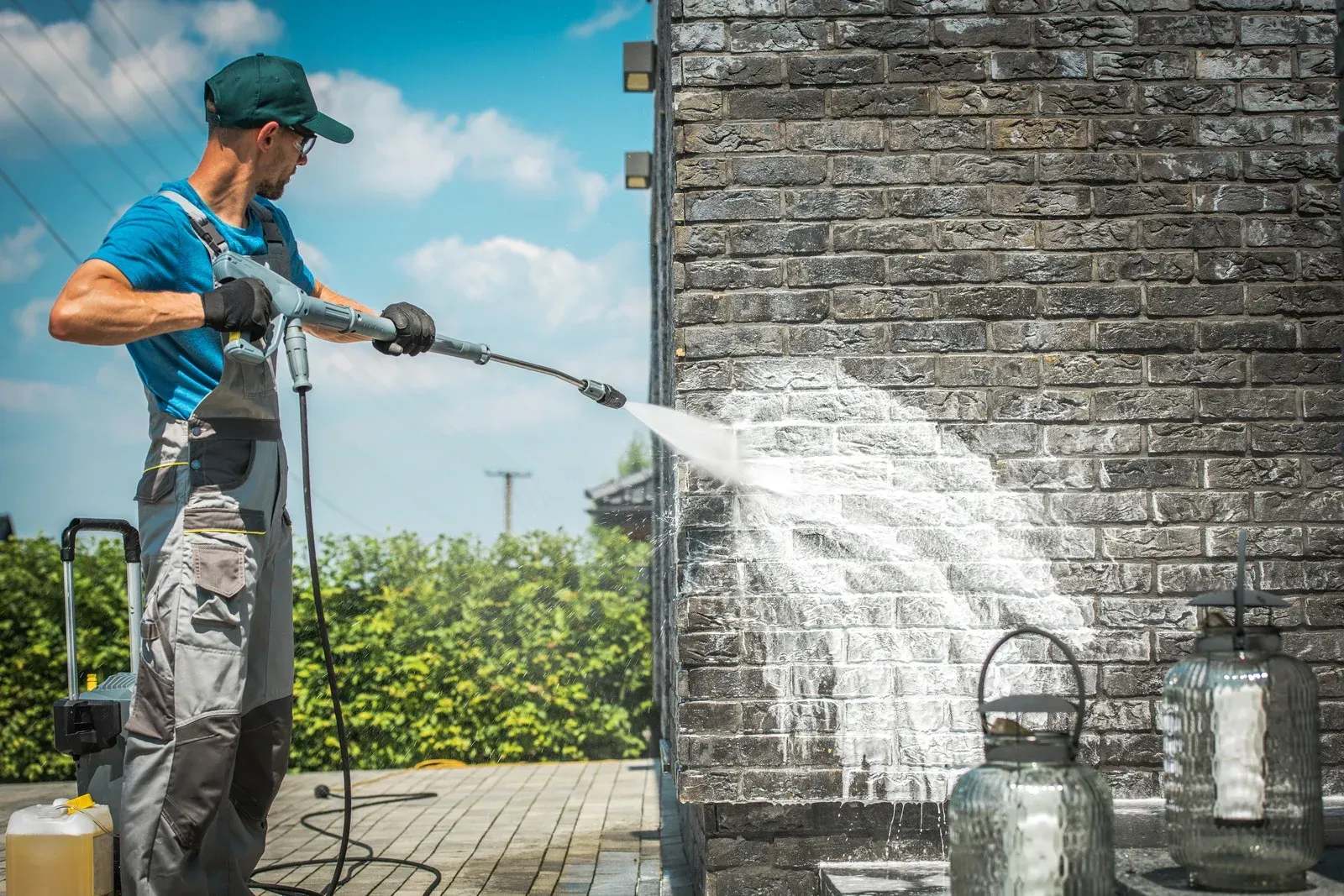
Chalk, salt residue, and surface grime must be removed before repainting begins. A controlled soft wash with an appropriate cleaning solution and lower pressure removes loose material without forcing water into siding seams or damaging the substrate. Rinse the surface thoroughly, then allow it to dry completely before applying primer or beginning additional preparation.
Prime Where the Chalk Was Heaviest
Areas with heavy chalking, along with any bare or porous substrate exposed after washing, should receive an appropriate primer before painting. Primer creates a stable, bonded surface for the new finish coat to adhere to. This step is especially important when the original paint film has deteriorated significantly and the underlying siding requires additional protection.
Choose Paint for the Exposure
A high-quality 100 percent acrylic exterior paint generally provides better resistance to UV breakdown than oil-based or lower-grade products. Consider the home's exposure when selecting the finish. Areas receiving intense sunlight and moisture benefit from durable exterior coatings. Satin and semi-gloss finishes can also provide better moisture resistance than flat finishes on exterior siding.
WARNING: Skipping the wash-and-prime step to save time on a heavily chalking wall is the single fastest way to end up repainting the same wall again within a year or two. New paint applied over unwashed chalk doesn't fail gradually; it can start releasing in sheets within one wet season because it was never actually bonded to a solid surface.
Frequently Asked Questions
Is chalky paint dangerous or a health concern?
Modern exterior paint chalk is generally the breakdown of pigment and binder caused by weather exposure, not mold. However, older homes may contain lead-based paint, so deteriorating surfaces should be evaluated carefully before sanding or cleaning.
How can I tell chalking apart from mildew on my siding?
Chalking appears as a dry, white or off-white powder that transfers when rubbed. Mildew or algae usually looks gray, greenish, or black and tends to smear, especially in shaded, damp areas with limited sunlight.
Does a light chalk residue mean I need to repaint right away?
Not necessarily. Light chalking that washes away easily may only require thorough cleaning. If the residue quickly returns or remains heavy after washing, the paint film may be nearing the end of its protective life.
Will pressure washing alone get rid of chalking for good?
Pressure washing or soft washing can remove loose chalk from the surface, but it cannot stop the paint binder from continuing to deteriorate. Eventually, heavily chalking surfaces may require proper preparation, priming, and repainting.
Does the color of my house affect how fast it chalks?
House color mainly affects how noticeable chalking appears rather than how quickly the paint chemically breaks down. White or light-colored siding can hide residue, while darker colors make white chalk much easier to see.
Why does the south side of my house chalk faster than the north side?
South- and west-facing walls typically receive more direct sunlight and UV exposure than north-facing surfaces. That additional exposure accelerates binder degradation, so these areas commonly develop noticeable chalking sooner than shaded sides of the home.
Knowing When Chalking Means Paint Needs Attention
Chalky residue on siding is a visible reminder that exterior paint does not last indefinitely, especially when it faces strong sun, moisture, and changing weather. A light powder may simply call for cleaning, while heavier chalking can indicate that the paint's protective binder has significantly deteriorated. Recognizing the difference helps homeowners avoid painting over an unstable surface and gives them a better idea of when proper washing, priming, and repainting may be necessary.
For homeowners in Lexington, KY, local exposure can play a major role in how quickly painted siding ages. Preferred Quality Painting, LLC, with 40
years of experience serving Lexington, KY, understands that every home's siding can show different levels of wear depending on its orientation, existing coating, and exposure to weather. Paying attention to chalking early makes it easier to maintain the siding properly and preserve a sound, attractive exterior finish.